
If your garage door is opening and closing smoothly right now, it will probably survive winter just fine with a basic check-up. The exceptions are doors that already stick, drag, or make noise, homes with uninsulated garages that swing hard between humid days and sudden cold snaps, and any door that hasn't been lubricated or inspected since last spring. Those are the ones that tend to fail during the first real ice event of the season.
Why Winter Here Is Harder on Garage Doors Than People Expect
Eastern North Carolina doesn't get brutal, sustained cold, but that's part of the problem. The swing from warm, humid fall days to sudden overnight freezes and the occasional ice storm puts more stress on metal hardware than steady cold would. Add in the leftover moisture from hurricane remnants earlier in the season, pine needles and sap that have worked their way into tracks, and months of pollen residue sitting on rollers, and you've got a door that's more worn than it looks from the driveway.
Check the Weatherstripping and Bottom Seal
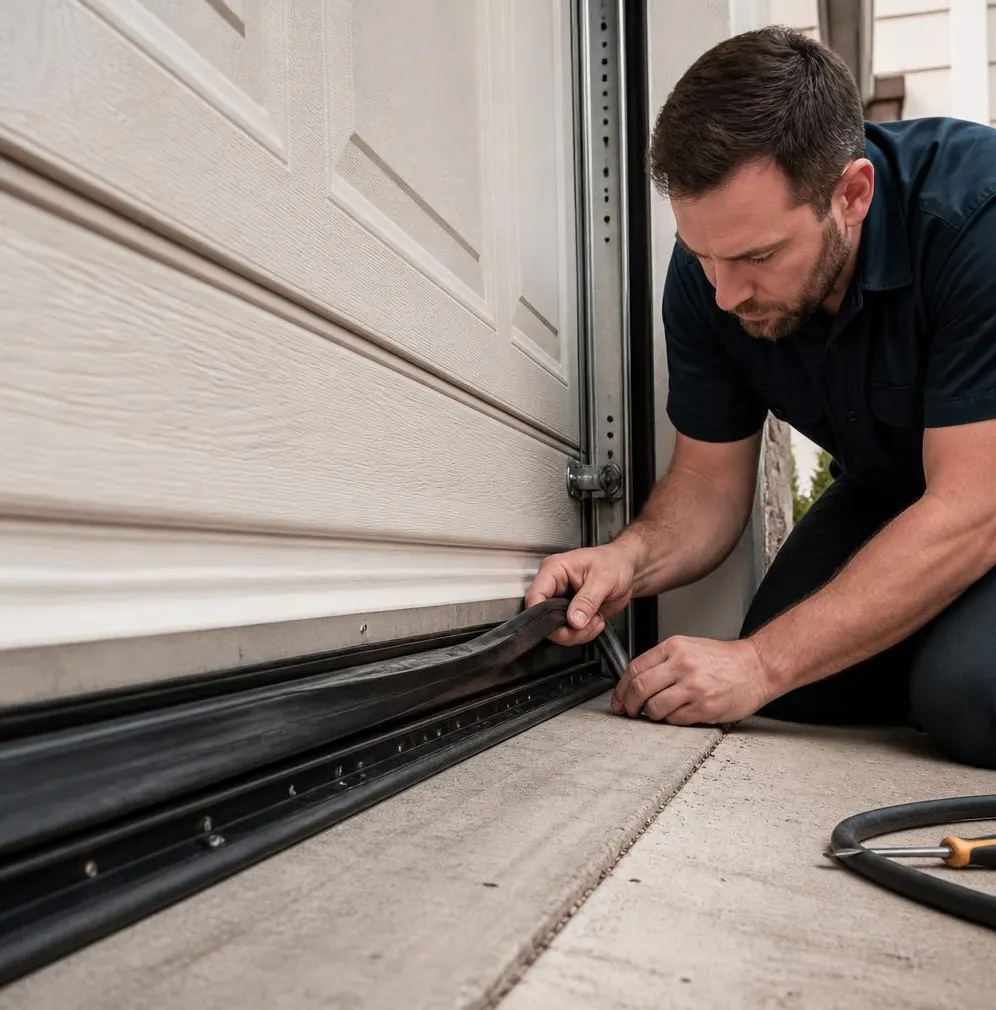
Humidity and rain cause the rubber seal along the bottom of the door to crack, flatten, or pull away from the track over time. In winter, a gapped seal does two things: it lets cold air and moisture straight into the garage, and it gives mice and insects an easy entry point looking for shelter.
- Run your hand along the bottom seal — if it's stiff, cracked, or doesn't spring back after you press it, it's time to replace it.
- Check the vertical weatherstripping on the sides of the door frame for the same wear.
- Look for daylight gaps when the door is closed, especially at the corners.
Replacement seals are inexpensive and a reasonable DIY project if your door is on a standard track, but measure twice — seals come in different profiles and don't all fit the same track style.
Lubricate Before the First Cold Snap, Not After
Cold tightens metal and thickens old grease, which is exactly why doors that were fine in October suddenly groan, hesitate, or bind in December. Hinges, rollers, and the torsion spring itself all need a light coat of a garage-door-specific lithium or silicone-based lubricant — not WD-40, which is a cleaner and degreaser, not a long-term lubricant.
- Wipe down tracks and rollers first to remove pollen film, pine sap, and summer grit before applying anything fresh.
- Lubricate hinges, rollers, and the spring, but avoid getting oil on the nylon rollers themselves if you have them — they don't need it and it attracts more dirt.
- Do this before temperatures start dropping regularly, since lubricant spreads and settles better in mild weather.
Pay Attention to the Spring, Especially After an Ice Storm
Torsion and extension springs lose a bit of flexibility in cold weather, and the added weight of a door that's picked up moisture or minor ice can push an already-weak spring past its limit. Common warning signs include the door feeling unusually heavy when opened manually, a visible gap in the spring coil, or a loud bang from the garage on a cold morning — that's often a spring snapping under the added tension.
Springs are under serious tension and are not a safe DIY repair. If you're seeing any of these symptoms, this is a job to schedule before it becomes an emergency call during an actual ice storm.
Check for Rust and Corrosion
The humidity swings common here mean condensation can form on metal brackets, tracks, and springs even without direct rain exposure. A little surface rust on hardware isn't an emergency, but rust on the spring coils or on cable ends is worth addressing before it weakens the metal further.
- Look closely at the bottom brackets and cable ends, where moisture tends to collect.
- A light coat of appropriate lubricant helps slow corrosion through the wetter months.
- If you see flaking rust or pitting on load-bearing hardware, that's a sign the part needs replacing, not just cleaning.
Test the Auto-Reverse Safety Feature
This takes two minutes and matters more in winter because cold can affect sensor alignment slightly as metal brackets contract. Place a piece of wood or a roll of paper towels on the ground where the door closes. The door should reverse immediately on contact. If it doesn't, or if it closes unevenly, the sensors may need realignment or the limit settings may need adjustment.
Give the Opener a Once-Over
Cold doesn't love opener motors any more than it loves anything else mechanical. Listen for new grinding or straining sounds, and check that the chain or belt has proper tension — a loose chain can slap or skip, especially once cold makes the metal rail contract slightly.
When to Call Lucama Garage Door
If your door is sticking, the spring looks stretched or gapped, or you're hearing new noises that show up only in cold weather, that's the point to call in rather than keep testing it yourself. Our Garage Door Maintenance visits cover exactly this seasonal check — lubrication, hardware inspection, seal condition, and a safety test — so small wear doesn't turn into a dead spring on a 30-degree morning. And if a spring has already failed or is clearly on its way out, our Spring Replacement service gets it swapped safely with the right size and tension for your door, no guesswork involved.
If you're in Lucama, Wilson, Elm City, Sharpsburg, Bailey, Middlesex, Spring Hope, or Kenly and want your garage door checked before the next cold snap or ice event, give Lucama Garage Door a call. We'll get it sorted before winter makes the decision for you.